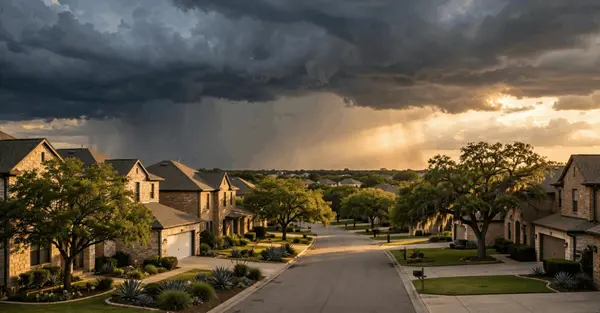
Why Isn't My House Selling in San Antonio? Price, Presentation, and Product
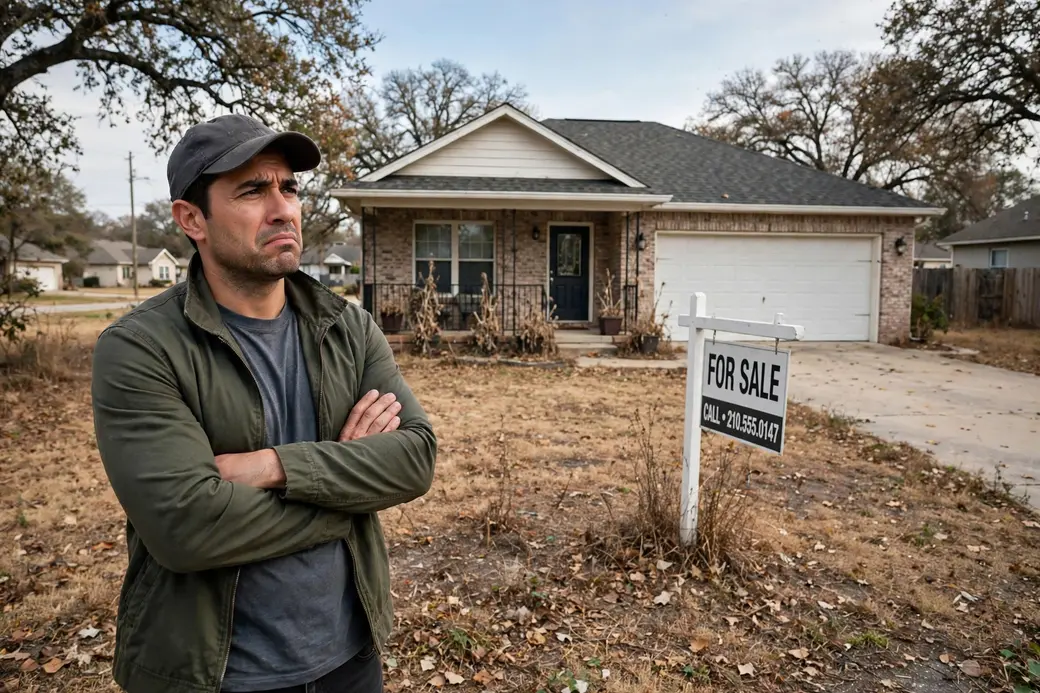
If your home has been on the market for weeks with showings but no offer, or worse, no showings at all, it is easy to assume something is broken.
Sometimes something is. But in this San Antonio market, a slower sale is also just what the data says to expect, and understanding why buyers are moving slower will help you fix the right thing instead of guessing.
1. Buyers are taking longer to make a decision
This is not the market where a home went under contract in a weekend.
According to SABOR, San Antonio homes averaged 88 days on the market in October 2026, up 7% from a year earlier. Closed sales were 2,524, down 5% year over year. Pending sales dropped 24% to 2,032. The median price was $299,370, essentially flat compared to last October, and homes closed at 91.8% of their original list price.
Translation: buyers are not gone. They are slower, pickier, and doing more homework before they write.
2. They are comparing more inventory than ever before
Your home is not competing against the three houses on your street anymore. It is competing against almost the whole map.
SABOR counted 17,148 active listings in October, with 5.96 months of inventory. Realtor.com put the San Antonio metro median at 74 days on the market in October, with a median list price of $319,900, down 2.5% from last year.
A buyer shopping today is comparing:
- Resale homes in several neighborhoods, not just one
- New construction, where builders can offer closing cost help and interest rate buydowns a resale seller usually cannot match dollar for dollar
- Different areas entirely, trading a shorter commute for a lower payment, or more space for an older home
- The monthly payment on every option, side by side
That last one is huge. Freddie Mac reported the average 30-year fixed rate at 7.28% for the week ending November 19, up from 7.11% the week before. On a $300,000 loan, that is roughly $2,053 a month in principal and interest. Every $10,000 of price is about $68 a month at that rate. Buyers are not just asking, "Do I like this house?" They are asking, "Do I like this payment more than the payment on the other five houses I saved?"
When buyers have that many comparisons to make, they take longer. That is normal buyer behavior in a high choice market, not a sign your home is a failure.
3. Your price is an invitation
Here is the mindset shift that separates sellers who move from sellers who sit:
Your list price is an invitation, not a verdict.
It invites a buyer to book a showing. It invites them to picture living there. It invites an offer. It does not guarantee any of those things, and it is not based on what you paid, what you owe, or what you need to net on the next house.
The market answered a lot of invitations in October by negotiating. Homes closed at 91.8% of original list price, and 27% of San Antonio listings took a price cut in October, compared to 20.5% nationally. Price too high, and you do not get a lower offer to negotiate. In most cases, you get no offer at all, because the buyer picked a home whose price invited them in.
Price it as an invitation to compete, and you get showings, feedback, and a chance. Price it as a final answer, and buyers quietly move to the next listing.
4. All three levers have to click: price, presentation, and product
Think of a sale like a lock with three levers. All three have to click before a buyer writes.
Price: Does your price line up with what actually sold in your neighborhood in the last 90 days? Not what a neighbor is asking. Not an online estimate. What closed. If your price only makes sense compared to active listings that are also sitting, you are priced with the homes that are not selling.
Presentation: Buyers meet your home on a phone screen first. Do the photos stop the scroll? Is the home decluttered, bright, and easy to picture living in? When they walk in, does it feel cared for and move-in ready, or does it hand them a to-do list? Buyers discount every visible repair by far more than it would cost you to fix it, so the cheap fixes, paint, lighting, landscaping, and a deep clean, protect your price better than almost anything else.
Product: This is the lever sellers forget. The product is the home itself and everything that comes with it: the neighborhood, the lot, the floor plan, the age, the schools, the commute, and how it lives day to day. You cannot move your home to a different street, and you cannot add a fourth bedroom overnight. So when the product has a real limit, a busy road, a small lot, an unusual layout, price and presentation have to compensate for it. Pretending the limit is not there does not make buyers ignore it.
Miss on one lever and the home can still sell, but it will usually take longer and net less. Click on all three, and you have given every ready buyer a clear reason to choose yours.
5. Even when all three click, your neighborhood sets the clock
Here is the honest part, and it is the part that should take some pressure off.
Even a well priced, beautifully presented, great product home can take longer in one neighborhood than the exact same home would take in another.
San Antonio is not one market. It is hundreds of small markets moving at different speeds. One neighborhood may have two active listings and ten buyers looking. Another may have ten active listings, two new build communities nearby, and three buyers. SABOR's 88 day average is an area wide average. Your street has its own number.
And at the end of all of it, a simple truth controls the timeline: a buyer has to pick your home next.
Not eventually. Next. Ahead of the new build with the buydown. Ahead of the price cut down the street. Ahead of waiting another month to see what else comes up. Your job as a seller is not to convince every buyer. It is to make your home the obvious next pick for the right buyer in your neighborhood, at your price range, right now.
What to do if your home is sitting
Work the levers in order, with data, not panic:
- Check the showing count first. No showings usually means price or presentation online is stopping the click. Showings with no offers usually means buyers like the product but not the price, or something they see in person is turning them off.
- Read the feedback honestly. If three buyers say the same thing about price, condition, or a room, that is the market talking. Listen the first time.
- Watch what goes pending around you. The homes buyers picked instead of yours will tell you exactly what you are competing against on price, presentation, and product.
- Fix the cheapest lever first. New photos, a deep clean, and small repairs cost hundreds. A price correction costs thousands. Do not pay for a presentation problem with a price cut.
- If you adjust price, make it count. A small trim that keeps you in the same search range rarely changes buyer behavior. A real repositioning that puts you ahead of your direct competition can restart showings.
The bottom line
Most homes in San Antonio are not failing to sell. They are waiting longer in a market where buyers have more choices, higher payments to weigh, and no reason to rush.
Price your home as an invitation. Present it so buyers can picture their life in it. Be honest about the product and the neighborhood you are in. Do those three things, and you give your home the best possible chance to be the one a buyer picks next.
Wondering which lever is holding your home back? Send me your address and I will run the neighborhood numbers and tell you straight, price, presentation, product, or just timing.
Chance Pircher, REALTOR
Brokered by LPT Realty LLC
(210) 331-3870
https://chancethetxrealtor.com
Frequently Asked Questions
Why isn't my house selling in San Antonio?
In most cases, one of three levers is not clicking: price, presentation, or product. The price may not invite showings, the photos or condition may not convince buyers in person, or buyers may be choosing a different home, neighborhood, or new build. Timing also matters. San Antonio homes averaged 88 days on the market in October 2026, so a slower sale does not always mean a home is priced wrong.
How long does it take to sell a house in San Antonio right now?
According to SABOR, homes in the San Antonio area averaged 88 days on the market in October 2026, up 7% from a year earlier. Realtor.com reported a median of 74 days on the market for the metro in October. Your actual timeline depends on your neighborhood, price range, and competition. Some neighborhoods move in weeks, while others take three months or longer.
How much do San Antonio homes sell for compared to their asking price?
San Antonio homes closed at 91.8% of their original list price in October 2026, according to SABOR. That means sellers who started high often negotiated down or cut their price before selling. Pricing close to what comparable homes actually sold for usually produces stronger showings and cleaner offers than starting high and chasing the market down.
Should I lower my price if my house is not selling?
Not always first. If you are getting no showings, check your price against recent closed sales and check your online presentation, photos, and description. If you are getting showings but no offers, buyers are usually rejecting the price or something they see in person. Fix the cheapest problem first, presentation, before paying for it with a price cut. If you do cut, make it large enough to move you ahead of your direct competition and into a new group of buyers.
Do price cuts work in San Antonio?
Price cuts can restart showings when they meaningfully change how a home compares to its competition. In October 2026, 27% of San Antonio listings had a price cut, compared to 20.5% nationally, according to Realtor.com. A small trim that keeps a home in the same search range and still above comparable sold homes rarely changes buyer behavior.
How does new construction affect resale home sellers in San Antonio?
New construction competes directly with resale homes on monthly payment. Builders can often offer closing cost incentives and interest rate buydowns that lower a buyer's payment. A resale seller cannot always match those incentives dollar for dollar, so price, presentation, and move-in readiness have to make the resale home the better overall pick for that buyer.
What should I fix before lowering my price?
Start with the low cost, high impact items buyers notice first: professional photos, decluttering, a deep clean, fresh paint where it is worn, brighter lighting, curb appeal and yard cleanup, and small visible repairs. Buyers tend to discount a home by far more than those fixes cost. Only after presentation is right does a price adjustment give you a clean read on whether price was the real problem.
Is San Antonio a buyer's market or a seller's market in 2026?
San Antonio had 5.96 months of inventory in October 2026, according to SABOR, which sits right at the line most people use between a balanced market and a buyer's market. In practical terms, buyers have choices and time to compare, and sellers have to earn the showing and the offer. Well priced, well presented homes still sell. Overpriced homes sit longer than they used to.
Sources
- SABOR, October 2026 market statistics, released November 10, 2026: 2,524 closed sales, median $299,370, average $365,247, 88 average days on market (up 7% year over year), 91.8% of original list price, 5.96 months of inventory, 17,148 active listings, 3,917 new listings, 2,032 pending sales (down 24%).
- Realtor.com, San Antonio metro, October 2026: median list price $319,900 (down 2.5% year over year), 74 median days on market, 27.0% of listings with a price cut vs. 20.5% nationally, 13,792 active listings.
- Freddie Mac Primary Mortgage Market Survey, week ending November 19, 2026: 30-year fixed 7.28% (up from 7.11% the prior week), 15-year fixed 6.66%. Payment figures are principal and interest estimates calculated from those rates.
Categories
Recent Posts